Looks like you're located outside the continental United States!
While we can't ship Royal NY Line Up boxes to you through our website, our team of coffee traders will be happy to help place your order and secure the best shipping rates for you.
Please note that if you have other items in your cart such as tea or tickets to an event at The lab, you will not be able to proceed to payment until all 22lb. boxes have been removed from your order
Looks like you're located outside the continental United States!
While we can't ship Royal NY Line Up boxes to you through our website, your coffee trader will be happy to help place your order and secure the best shipping rates for you.
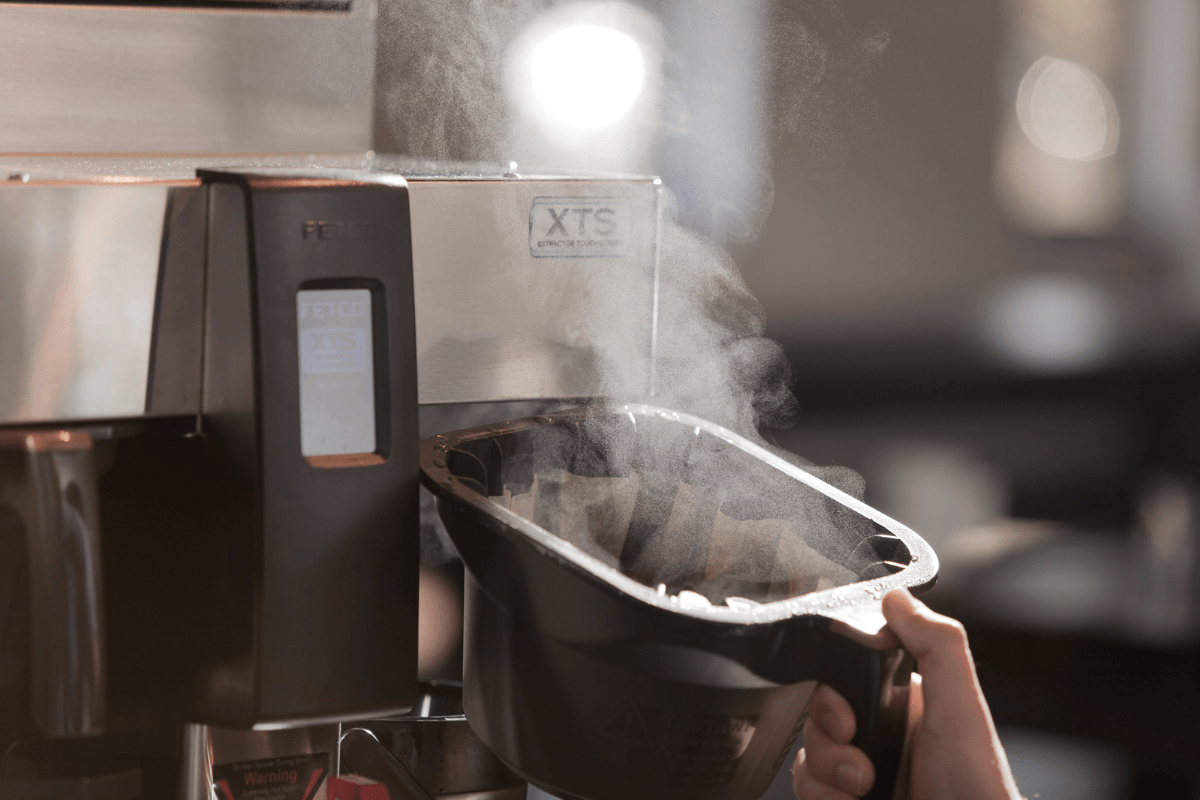
In Part 1 of our series on why cupping coffee matters, we explored how cupping helps coffee professionals evaluate quality. It’s controlled, repeatable, and excellent for isolating flavor. But here’s the catch: your customers aren’t cupping your coffee. They’re drinking it as a batch brew.
If you want to understand how your blend truly performs, you need to evaluate it the same way it’s most often consumed.
Why Batch Brew Evaluation Matters
Blends are designed for balance, consistency, and approachability. While cupping highlights individual components, batch brewing reveals how those components integrate under real extraction conditions.
A blend that shines on the cupping table can fall flat in a batch brewer. Conversely, a blend that tastes “just okay” in cupping might come alive with the right brew parameters.
Evaluating batch brew coffee helps you answer:
Does the blend feel cohesive in the cup?
Are sweetness and body translating properly?
Is acidity balanced or distracting?
How does the coffee hold up as it cools?
Set Up for Consistency
To evaluate effectively, control your variables. Treat this like a production test, not a casual brew.
Key parameters to lock in:
Brew ratio
Grind size
Water quality
Dose size
Brew temperature
Use the same setup across all blends or roast variations so your comparisons are meaningful. If you change multiple variables between brews, it becomes harder to identify what’s affecting the final cup.
What to Look for When Evaluating Batch Brews
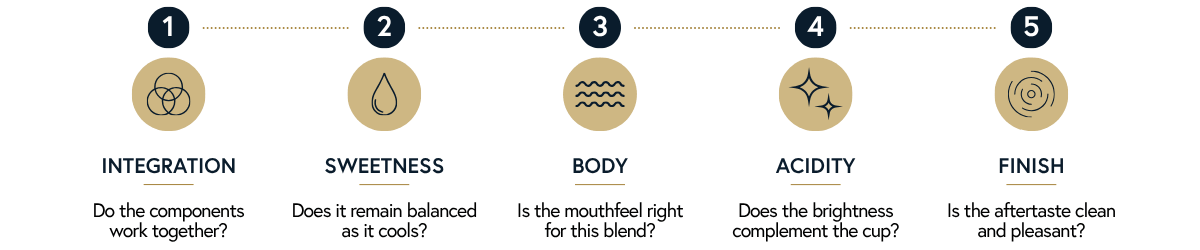
1. Integration Over Individuality
Great blends shouldn’t taste like a list of origins. They should taste like a single idea. Ask yourself:
Do the components feel integrated?
Is anything sticking out awkwardly, such as sharp acidity or a woody finish?
2. Sweetness as the Anchor
In batch brew, sweetness is what makes a coffee approachable and repeatable. Look for:
Round, lingering sweetness
Sugars that develop as the cup cools
Absence of hollow or drying sensations
If sweetness drops off, consider adjusting development time or component ratios.
3. Body and Texture
Batch brews highlight mouthfeel differently than cupping. Evaluate:
Weight: Is the coffee tea-like or syrupy?
Texture: Does it feel silky, chalky, or thin?
Finish: Does the coffee coat the tongue or have a clean finish?
4. Acidity Balance
Acidity in batch brew coffee should support the overall profile, not dominate it. Consider:
Pleasant brightness versus sharpness
How acidity interacts with sweetness
Whether acidity fades or spikes as the cup cools
5. Finish and Aftertaste
The finish is where many blends succeed or fail. Look for:
A clean finish versus bitter or astringent endings
Flavors that linger pleasantly
Any dryness or bitterness that becomes more noticeable as the coffee cools
Batch Brew to Dial In Your Blend
Once you’ve identified what isn’t working, use your observations to guide adjustments. Start with the brewing variables before changing the blend itself.
Are you tasting:
Thin body? Check your brew ratio and extraction.
Muted sweetness? Evaluate extraction and roast development before changing component ratios.
Harsh acidity? Check grind size, brew temperature, and extraction consistency.
Flat cup? Revisit blend component ratios and consider whether the roast profiles are supporting the intended flavor.
So, should you cup your coffee or batch brew?
Final answer: use both. This isn’t about replacing cupping—it’s about complementing it.
Cupping = Precision, comparison, defect detection
Batch Brew= Experience, integration, drinkability
The best workflow uses both:
Build and refine components on the cupping table.
Validate and adjust the blend through batch brew.
Cupping helps you understand what each coffee brings to a blend. Batch brewing helps you understand how those coffees work together in the cup. If your goal is to create blends people love drinking every day, you need to evaluate them in the context in which they’ll actually be consumed.
Looks like you're not logged in! If you have an account, log in here
Don't have an account? Click here to register or close popup window and continue shopping.
You successfully reset your password, please login to your account.
This site uses cookies to allow for proper checkout and order processing; they are not used for any other tracking purposes. By continuing, you accept our use of cookies.