Looks like you're located outside the continental United States!
While we can't ship Royal NY Line Up boxes to you through our website, our team of coffee traders will be happy to help place your order and secure the best shipping rates for you.
Please note that if you have other items in your cart such as tea or tickets to an event at The lab, you will not be able to proceed to payment until all 22lb. boxes have been removed from your order
Looks like you're located outside the continental United States!
While we can't ship Royal NY Line Up boxes to you through our website, your coffee trader will be happy to help place your order and secure the best shipping rates for you.
Coffee from Peru is familiar to many roasters, especially those looking for certified Organic and Fair Trade coffees. Coffee is grown along the eastern slopes of the Andes across 17 of the country’s 24 regions. Each area has its own growing conditions and coffee varieties. More than 202,000 farms contribute to Peru’s coffee production. Most are small family farms averaging just over one hectare. Together, smallholder farmers produce more than 70% of the country’s coffee. The industry also supports nearly one-third of Peru’s agricultural workforce and provides an important source of income for many rural communities.
Overview of Peru Coffee Production
Production: Primarily smallholder farms across 17 coffee-growing regions
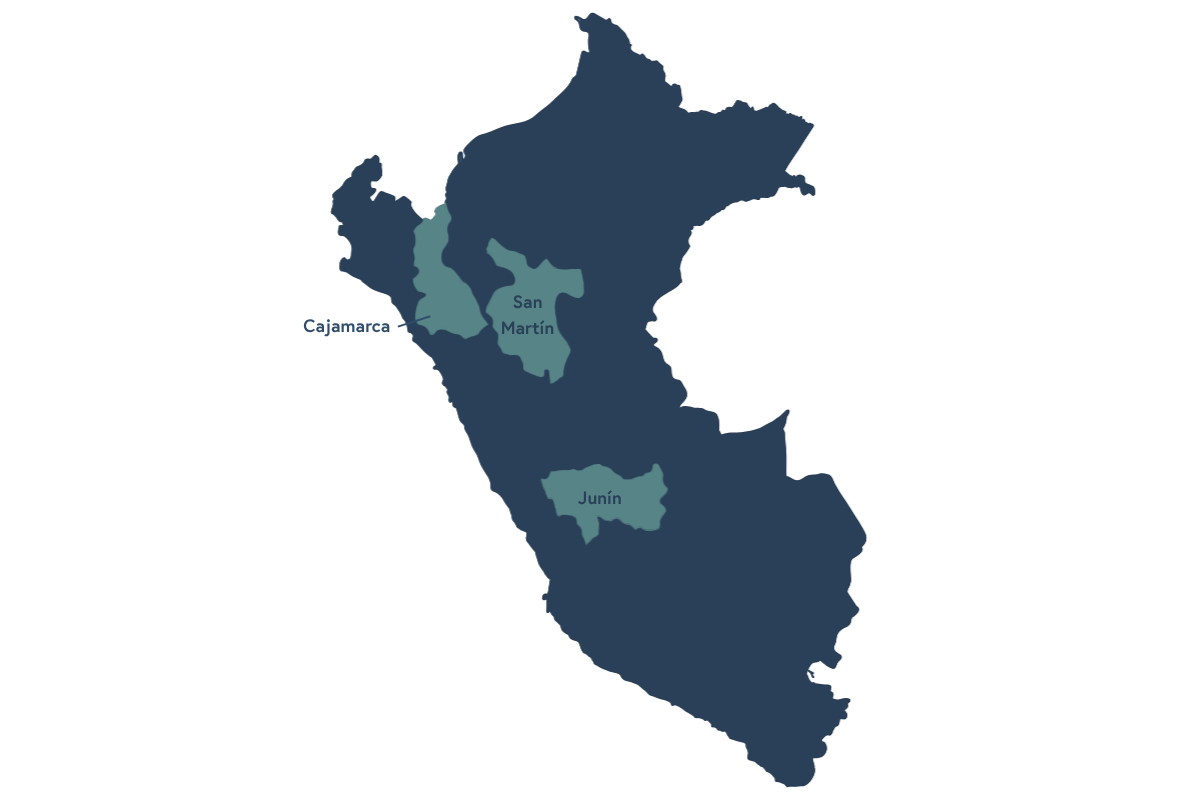
Notable Growing Regions: Cajamarca, Chanchamayo, San Martín
Varieties: Castillo, Pache, Typica, and other Arabica varieties
Average Farm Size: Just over 1 hectare
Harvest Season: May through September
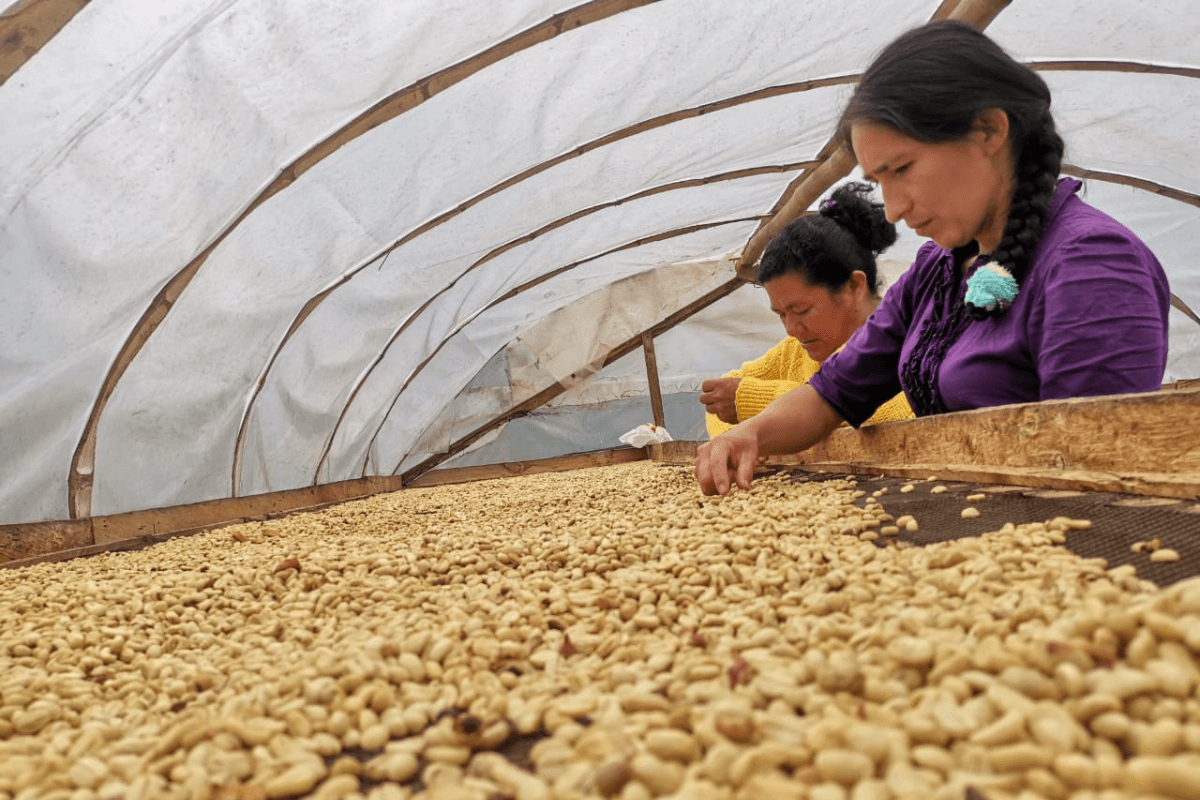
Processing: Fully washed, patio dried
Organic Coffee Production in Peru
Organic coffee production in Peru really started to take shape in the 1990s. Smallholder farmers and cooperatives were looking for better access to international markets. Certification gave these groups a way to differentiate their coffees and earn better premiums. The cooperative structure also helped farmers manage certification, improve quality, and sell collectively.
The model worked well for Peru, where coffee production is largely made up of small farms. By the early 2000s, the country had grown into one of the world’s largest producers of certified Organic coffee.
That growth hasn’t always been easy. Coffee leaf rust hit Peru especially hard in 2012 and 2013. Organic producers were particularly vulnerable because they had fewer options available to control the disease.
The industry recovered, though, and today Peru remains one of the most important Organic coffee origins in the world. What started largely as a way for small producers to access better markets has evolved into something much bigger. Organic production is now closely tied to Peru’s cooperative system, traceability, long-term producer relationships, and an increased focus on cup quality.
Why Peru Stands Out
Peru is also the world’s leading producer of certified Fair Trade and organic Arabica coffee. This makes it an important origin for roasters who need certified coffees in consistent volumes. Peru also has a strong cooperative system, with approximately 20% of its smallholder coffee farmers participating in producer organizations.
For a small farm, joining a cooperative can provide access to financing, agricultural training, quality control, certification, and international buyers. Cooperatives also help establish shared standards for harvesting and processing. This allows coffee from many small farms to be combined into a more consistent product for export.
Our Coffee Partners in Peru
Royal New York has worked alongside cooperatives throughout Peru for years. Over time, those partnerships have become about much more than coffee. They have allowed us to know the people behind each harvest, learn about the communities they call home, and better understand the pride and care that go into every crop. These lasting relationships are an important part of our connection to Peru and make it especially meaningful to share these coffees and their stories with roasters.
COOPAFSI in San Ignacio
COOPAFSI was established in San Ignacio, Cajamarca, in 1969. Women contribute directly to coffee production through its Las Damas de San Ignacio program. In 2016, the cooperative actually formed a women-led committee that provides loans for farm improvements and projects that create additional household income.
Las Damas coffee is grown between 1,500 and 1,750 meters. It is fully washed, patio dried, and harvested from May through September.
San Ignacio is also home to our Alpes Amazónicos and Río Amojú coffees. Together, they provide another example of the range that can be found within San Ignacio. Differences in producer groups, elevation, varieties, and farm conditions create distinct coffees.
La Florida in Chanchamayo
La Florida’s Cooperative began in Chanchamayo in 1965 with 100 small-scale farmers. Today, it works with more than 2,000. Fair Trade revenue has supported education, healthcare, agricultural training, credit, and community infrastructure.
Its organic coffee is grown between 900 and 1,220 meters. The coffee is fully washed, patio dried, and harvested from June through August.
Organic Coffee from San Martin
Our organic San Martín offering provides another look at Peru’s regional diversity. It is grown between 1,100 and 1,760 meters and includes Castillo, Pache, and Typica varieties.
The coffee is fully washed, patio dried, and harvested from May through September. Together, these offerings show how elevation, varieties, and farming communities can differ throughout Peru. This is true even when the coffees share similar processing methods.
What Coffee from Peru Offers Roasters
One of Peru’s greatest strengths is its range. The country can provide dependable organic and Fair Trade coffees for established programs. It also offers more traceable options connected to a specific cooperative, producer group, or growing area.
The harvest calendar is also helpful when planning purchases. The San Ignacio and San Martín coffees talked about here are harvested from May through September. La Florida’s harvest runs from June through August. Evaluating samples and planning purchases around these periods can help roasters prepare for fresh arrivals. It can also help them secure coffee before nearby inventory becomes limited.
From organic coffees to traceable offerings from established cooperatives, coffee from Peru offers roasters a wide range of options to explore. Explore our current Peru offerings to learn more about the coffees and producer partnerships behind them.