Looks like you're located outside the continental United States!
While we can't ship Royal NY Line Up boxes to you through our website, our team of coffee traders will be happy to help place your order and secure the best shipping rates for you.
Please note that if you have other items in your cart such as tea or tickets to an event at The lab, you will not be able to proceed to payment until all 22lb. boxes have been removed from your order
Looks like you're located outside the continental United States!
While we can't ship Royal NY Line Up boxes to you through our website, your coffee trader will be happy to help place your order and secure the best shipping rates for you.
Did you know that the United Nations has declared 2026 the International Year of the Woman Farmer? This global initiative recognizes the critical role women play in agriculture while bringing attention to the healthcare gaps many continue to face. In honor of this milestone year, we’re taking a closer look at the coffee supply chain and the essential role women coffee farmers play in it. We’ll also share how organizations like Grounds for Health are helping to strengthen coffee-growing communities by improving access to healthcare.
What are the roles in the coffee supply chain?
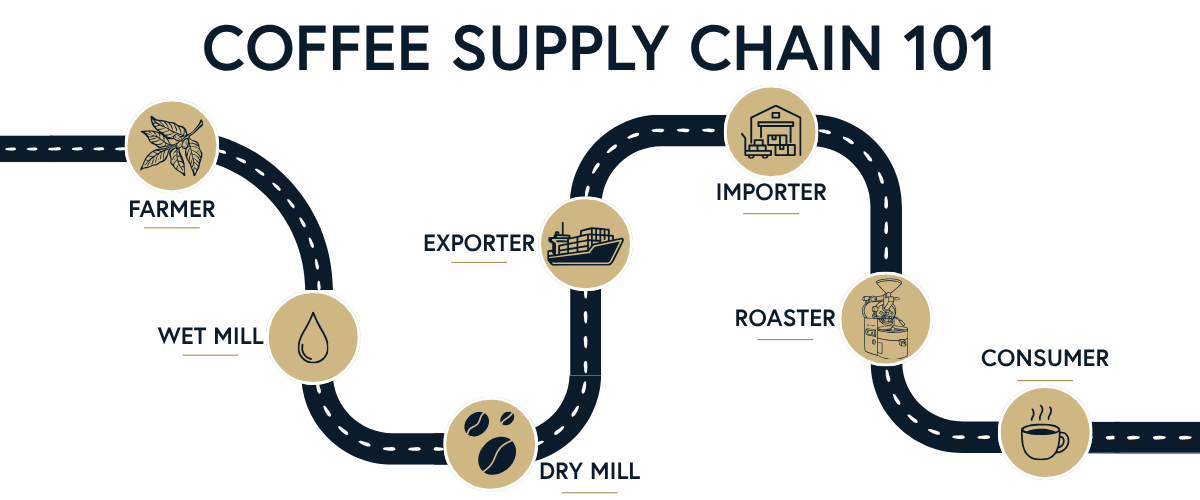
Before landing in your roastery, coffee has to change hands many times. While there are many nuances and variations, it typically looks something like this:
Every step in the chain depends on the one before it. Farmers grow and harvest the coffee, mills process and prepare it for export, exporters coordinate logistics at origin, importers source, finance, and warehouse green coffee, and roasters transform it into the end product.
What role does the farmer play in the coffee supply chain?
The coffee farmer is the foundation of the coffee supply chain. Throughout the growing season, farmers monitor tree health and adapt to changing weather conditions. During harvest, they set the picking window to ensure coffee cherries are harvested when they’re at peak ripeness. Every action the farmer takes directly influences the quality and consistency of every coffee.
The Impact of Grounds for Health
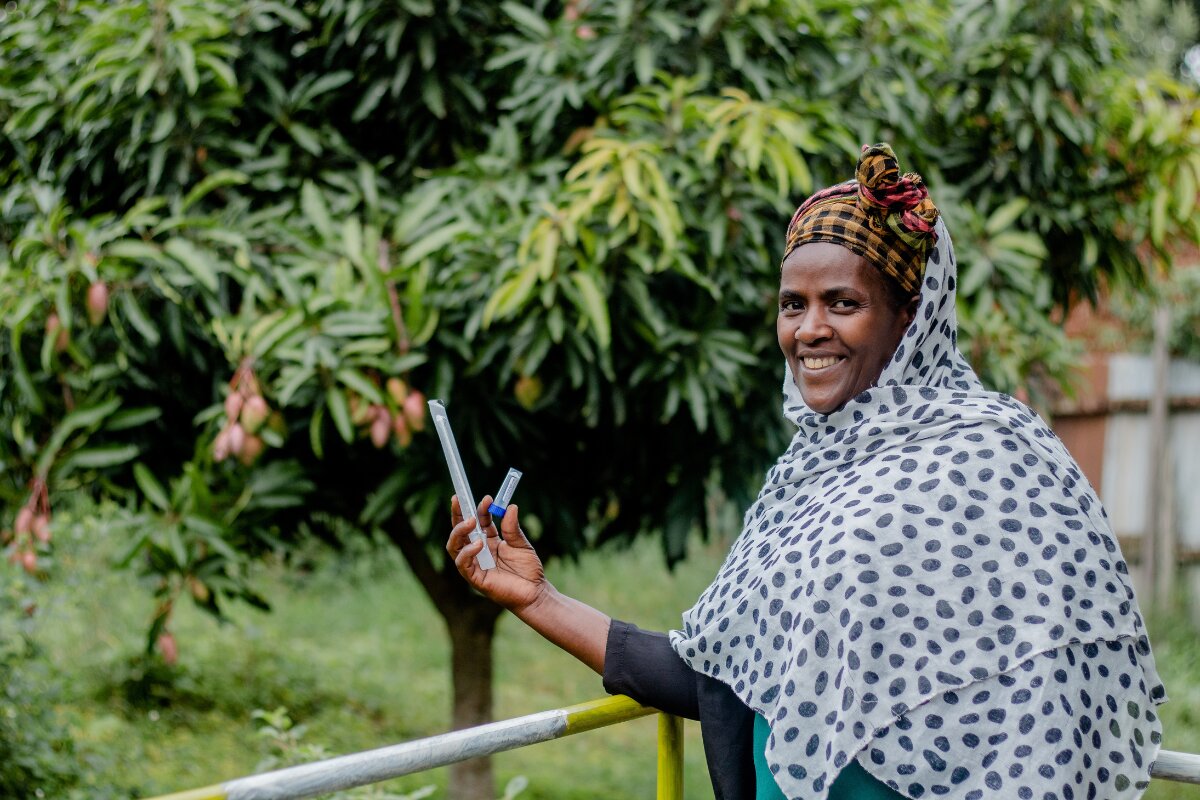
Women are the backbone of the global coffee supply chain (making up nearly 80% of the labor), but lifesaving cervical cancer screening rarely reaches their communities.
Cervical cancer is a nearly 100% preventable disease—yet in the next 15 years, it could kill almost 4.5 million women, many of whom live in low-income countries where coffee is grown.
Grounds for Health has been laser-focused on changing this narrative by providing women’s health programs in coffee communities since 1996. Their programs include innovative HPV screenings and life-saving treatment of cervical cancer.
The organization has done incredible work to increase women’s access to healthcare in Latin America and East Africa. Their current programs are in Ethiopia and Kenya, and they plan to expand their efforts to include Guatemala.
At Royal New York, we’re proud to support Grounds for Health and play a small part in the incredible work they do at origin. To date, they’ve screened 237,718 women and treated 19,848. While these statistics are impressive, their impact goes beyond these numbers. Every screening and treatment advances women’s healthcare access in rural communities and improves healthcare systems through the education and training they provide.
The result: a single woman’s health ripples outward, transforming families, communities, and generations to come.
We’ve committed an additional donation to Grounds for Health this month. If you’d like to learn more about Grounds for Health, use the buttons below.
Looks like you're not logged in! If you have an account, log in here
Don't have an account? Click here to register or close popup window and continue shopping.
You successfully reset your password, please login to your account.
This site uses cookies to allow for proper checkout and order processing; they are not used for any other tracking purposes. By continuing, you accept our use of cookies.