Whether you’re new to roasting coffee or have years of experience, getting used to terminology like “first crack,” “rate of rise,” or “development ratio” can feel like learning a new language. To understand what’s really going on in the roaster, we created a new roasting glossary so you can navigate the roastery with confidence.
Green Coffee Terminology
Batch: The amount of green coffee roasted in a single roast cycle. Consistent batch sizes help produce repeatable roast results.
Density: Dictates heat absorption in the roast process. The higher the altitude, the denser the coffee.
Moisture Content: The amount of water in green coffee, typically 9–13%.
Water Activity: A measurement of how much free, available water is present in green coffee. Coffee with high water activity is more susceptible to mold, aging, and flavor degradation.
Coffee Roasting Phases
Development Phase: The time between first crack and drop where you shape the final roast level and flavor profile. Also referred to as development time or post-first crack.
Development Time Ratio (DTR): The percentage of total time a roast spends in the development phase.
Drying Phase: The first stage of roasting where moisture evaporates inside the beans.
First Crack: The result of bean moisture content creating steam, which builds up pressure and causes the beans to crack open. Marks the start of the development phase.
Flavor Development: The process in which heat transforms the bean’s sugars, acids, proteins, and other compounds into the flavors and aromas found in the cup. Managing development time helps achieve the desired balance of sweetness, body, and complexity.
Maillard Reaction: Begins at yellowing and ends at first crack. As sugars begin to caramelize, color and complex flavors begin to develop.
Roast Level: The degree to which coffee is roasted, ranging from light to dark. Roast level influences color, aroma, acidity, sweetness, body, and flavor, but does not determine the coffee’s inherent quality.
Second Crack: A softer, more subtle cracking sound than first crack. Indicates the coffee is entering a darker roast level.
Roasting Controls
Airflow: The amount of air moving through the drum. Airflow removes moisture content, smoke, chaff, and heat from the roaster. Influences roast consistency, flavor clarity, and bean surface temperature.
Bean Temperature: The internal temperature of the coffee inside the roaster.
Charge: Adding green coffee to the roaster to start the roast.
Charge Temperature: The roaster temperature at the beginning of the roast.
Drop: Releasing roasted coffee into the cooling tray.
Drop Temperature: The final temperature when the roast is discharged to the cooling tray.
Gas Pressure: Dictates the heat input in a roasting machine, driving the rate of rise (RoR). Typically measured in inches of water column (inWC) or millibars (mbar).
Heat Application: Adding or reducing heat during a roast.
Heat Transfer: The movement of heat from the roaster to the coffee beans. During a roast, heat is transferred through conduction, convection, and radiation.
Rate of Rise (RoR): Meaures how quickly bean temperature is rising, typically expressed in degrees per minute (°F or °C/min). Helps control a roast’s pace and avoid stalling or crashing.
Soak: A technique where little or no heat is applied immediately after charging green coffee. Allows beans to warm more evenly before additional heat is introduced, improving roast uniformity.
Turning Point: The lowest bean temperature before it begins to rise.
Coffee Roasting Defects
Baking: Flat, dull flavors caused by an overly slow roast or ineffective heat transfer.
Crash: A sudden drop in RoR.
Flick: A sudden spike in RoR.
Scorching: Burned bean surfaces caused by intense charge temperature or poor drum contact.
Stall: A flattening of the RoR that can halt flavor development.
Tipping: Burned tips on the beans from excessive heat.
Flavor Evaluation Terminology
Cupping: A standardized method of tasting coffee to evaluate roast and flavor profiles.
Dry Fragrance: The aroma released from freshly ground coffee before water is added during a cupping. Initial indication of the coffee’s aromatic qualities.
Flavor Profile: The overall combination of flavors, aromas, acidity, sweetness, body, and aftertaste found in a coffee. Influenced by origin, variety, processing method, and roast level.
Roasting Machine Terminology
Bean Probe: A sensor inserted into the drum measuring the coffee’s internal temperature when roasting.
Chaff: The thin, papery skin that separates from the coffee bean during roasting and is accumulated by the roaster’s chaff collector. Must be removed regularly to maintain safety and proper airflow.
Cooling Tray: The section of a roasting machine that holds the roasted beans immediately after the machine discharges them. A rotating agitator stirs the beans while ambient or forced air is pulled through them to rapidly reduce their temperature.
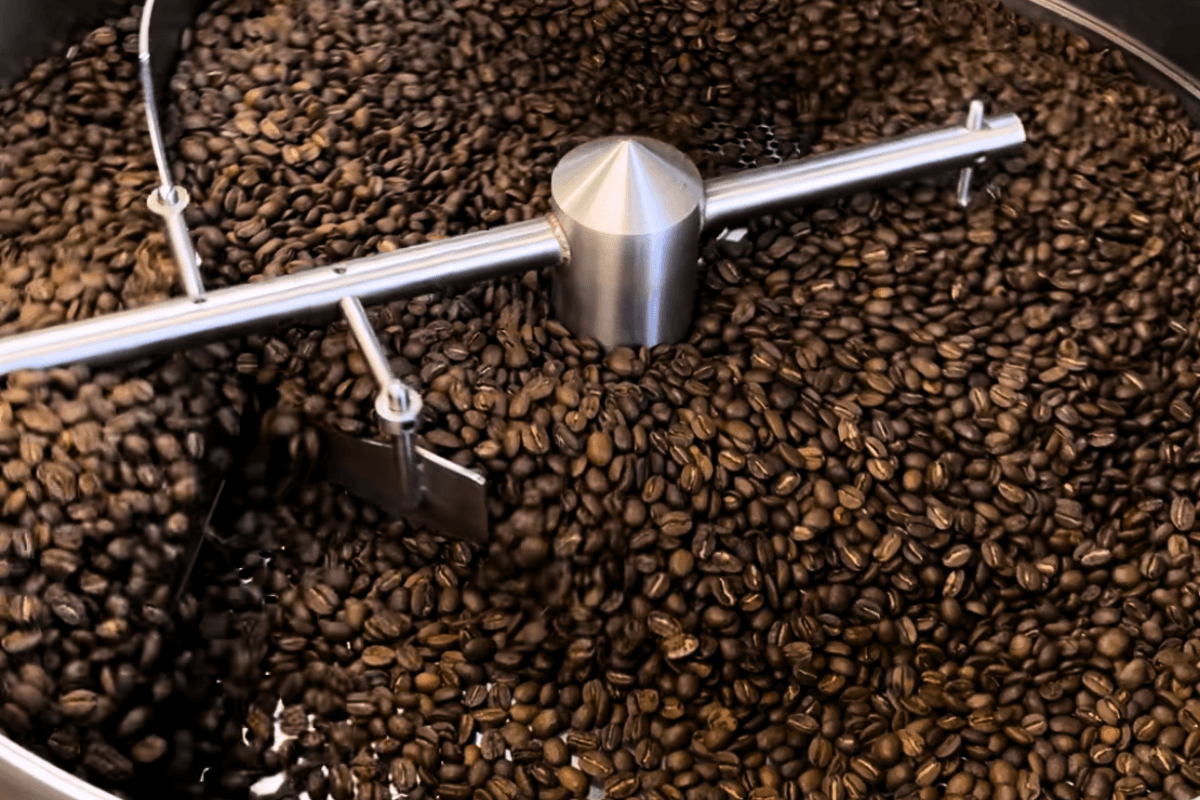
Drum: The cylindrical chamber inside a drum roaster that rotates the roasting green coffee.
Exhaust Probe: A sensor inserted into the drum measuring the temperature of air exiting the roasting machine.
Trier: A small metal tube with a handle that allows a roaster to remove a sample of the beans during the roast without stopping the process.
Updating Our Glossary
Our plan is to make this coffee roasting glossary a living resource on our blog. As more questions and ideas arise, we will update this glossary to include as much coffee roasting terminology as possible.
Notice something missing from our glossary? Then let us know what else you’d like defined!