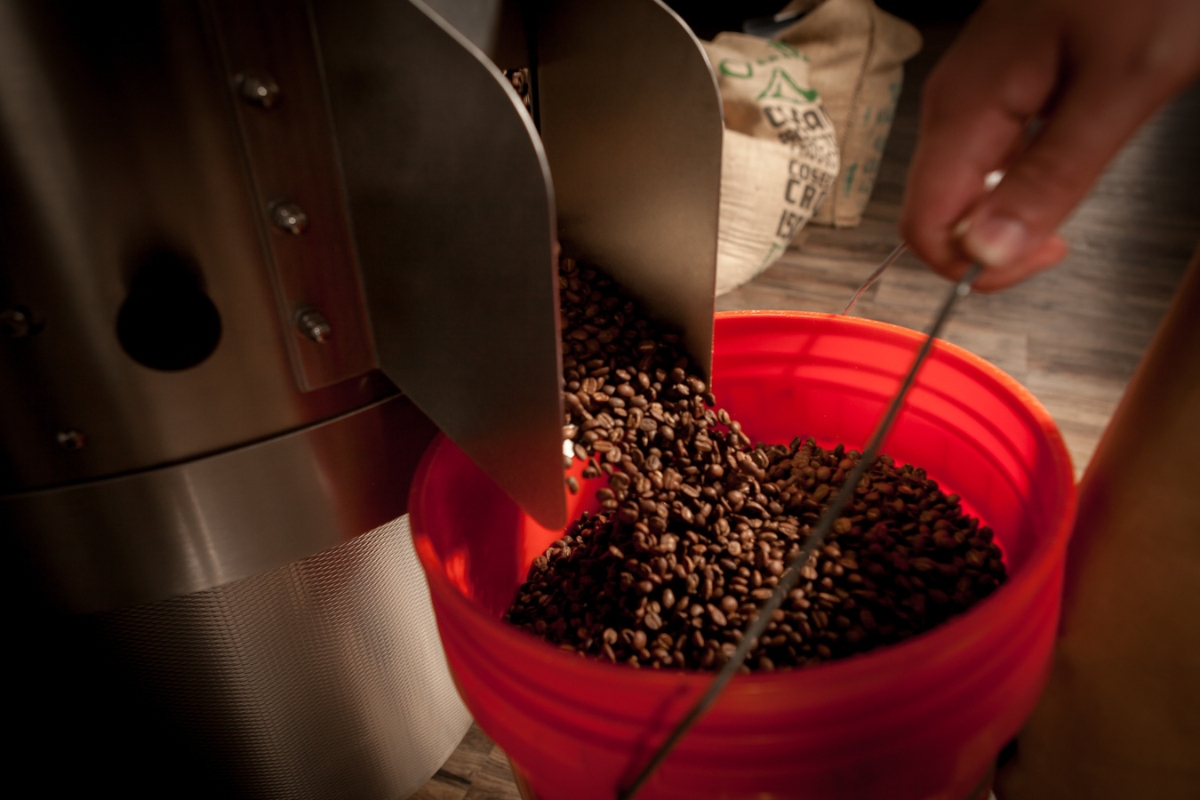
One of the most important tools a roaster has is the ability to shape a coffee’s flavor through roast adjustments. Learn how minor changes in heat application, roast duration, and development time can significantly influence the final coffee profile.
Understanding Coffee Roast Phases
For roasters, this process is less about rigid formulas and more about controlled experimentation. By adjusting variables within the roast curve, especially during key stages like drying, Maillard reaction, and post-first crack development, you can highlight different characteristics in the coffee.
Drying Phase
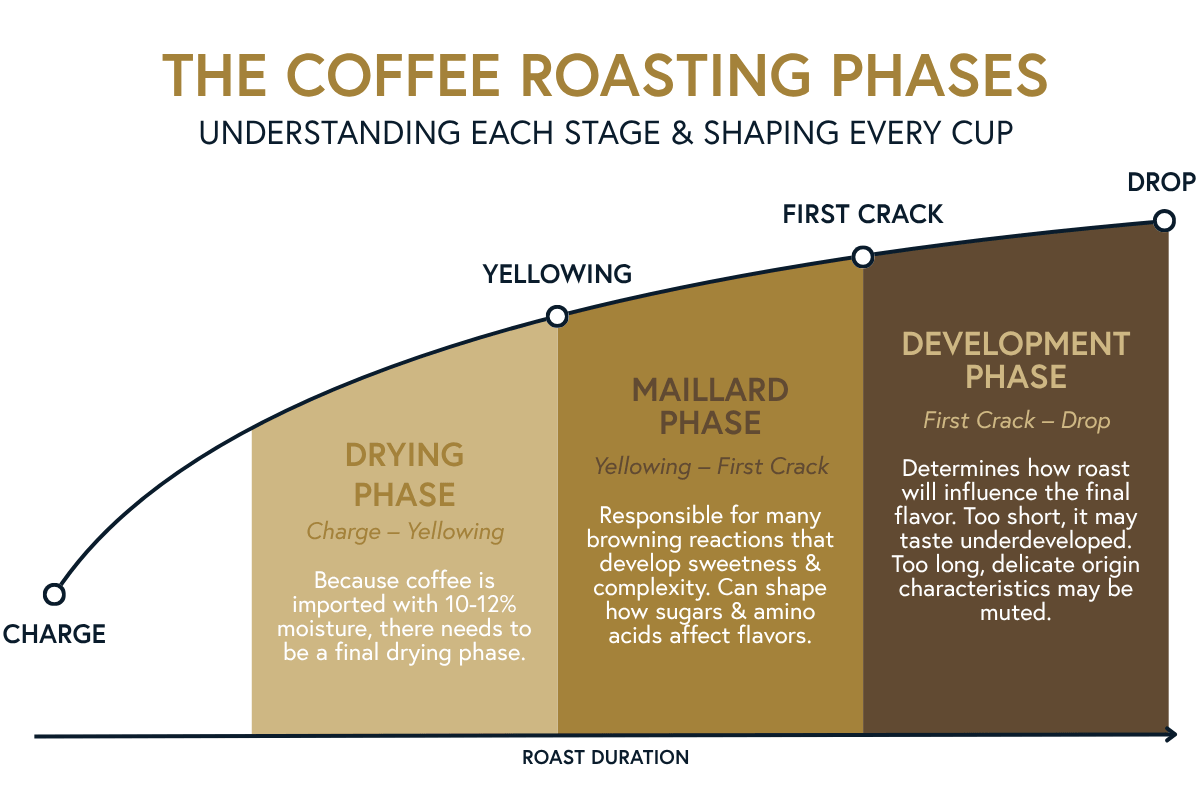
The drying phase begins when the green coffee is charged into the roasters and continues until yellowing. Because coffee is imported with 10-12% moisture, there needs to be a final drying phase.
Maillard Phase
This stage begins once yellowing occurs and continues until first crack. The Maillard reaction is responsible for many of the browning reactions that develop sweetness and complexity in coffee. When you make adjustments here, you can influence how sugars and amino acids interact and shape flavors.
Development Phase
Lastly, the development phase begins at first crack and ends when the coffee is dropped from the roaster. This stage determines how much of the roast’s character will influence the final flavor. If development is too short, then the coffee may taste underdeveloped. Too long, and delicate origin characteristics may be muted.
Coffee Roast Adjustments
Whether you’re aiming for bright acidity, deeper chocolate notes, or a heavier body, understanding how each stage of the roast affects flavor allows you to intentionally guide the outcome.
Highlighting Acidity
If your goal is a vibrant, lively coffee with pronounced acidity, the key is to limit how much roast development occurs after first crack. Shortening the development time and dropping the coffee at a lighter end temperature helps preserve the coffee’s organic acids. These acids are responsible for flavors reminiscent of citrus, berries, and tropical fruits, often found in coffees grown at a high elevation.
Enhancing Sweetness
Sweetness in coffee is closely tied to the Maillard phase. Extending this stage slightly allows sugars and amino acids to react longer, creating more caramelized and honey-like flavors. Moderating heat during the middle of the roast will allow the browning reactions to develop gradually without racing toward first crack.
Developing a Heavier Body
Body refers to the weight or viscosity of the coffee on the palate. Increasing roast development time can enhance body by allowing more structural compounds within the coffee bean to break down and integrate.
Floral Aromatics
Delicate floral notes are highly volatile and easily lost with excessive heat or prolonged roasting. To preserve these characteristics, roasters often apply heat gently throughout the roast and keep the development phase relatively short. This approach protects the aromatic compounds that give certain coffees a distinctive fragrance.
Bitterness
Bitterness often results from overdevelopment or pushing a roast too far. Carefully managing development time helps maintain balance and prevents harsh, smoky, or overly bitter flavors from dominating the cup.
While each adjustment can emphasize a particular flavor attribute, roasting is ultimately about balance and finding your desired cup profile.
Final Thoughts
Coffee roasting is both a science and a craft. Understanding how each stage of the roast influences flavor gives roasters the ability to shape the cup intentionally rather than relying on trial and error alone. By making thoughtful adjustments to development time, heat application, and roast level, you can highlight the unique qualities of each coffee and consistently deliver the flavor profile you’re aiming for.