Sumatra Takengon DP PT IKA – Red Cherry (GP) (22 lb. Box)

RNY#65017

  • indignant Black Cherry
  • indignant Cane Sugar
  • indignant Peach

$250.00/Box

Sourced From

Takengon/Gayo/Aceh, Sumatra

Varietals

Ateng, Timtim

Producer

N/A

Process

Wet Hulled, Patio Drying

Elevation

1300 to 1600 meters

Harvest

June - December

Position

Instore NJ

Availability

11 Boxes

Royal NY's Scoring

Acidity

Low

Body

High

Sweetness

Very High

Brew Analysis

Brew Style

V60 with Cafec T90 Filters

Grind Size

Medium Course, 11 on Timemore Sculptor

Coffee : Water Ratio

15g : 225g (1:15)

Total Brew Time

2:08

When you’re in coffee for so long, you tend to associate certain coffees and processing methods with specific flavor profiles. However, an exceptional coffee comes along every now and then that challenges those preconceived notions. This Red Cherry Sumatra is one such exceptional coffee. It challenges what you might expect a typical Sumatra or wet-hulled coffee to taste like. On the cupping table, it was fruity, expressive, and extraordinarily sweet; I wanted my brew to reflect that. My approach to this coffee was brewing for clarity; specifically, I chose to use Cafec T90 filter papers (for their fast drawdown times) paired with a gentle, four-pour approach. This recipe began with a soft 40 g bloom at 3 ml/s, followed by two 8 ml/s, 40 g pours at the 45-second and 1:00 marks. At 1:15, I went for another 3 ml/s pour, starting on the outside and spiraling inwards to small, dime-sized circles until I reached a total brew weight of 225 g. Although extremely hot right after brewing, the first sip had this remarkable sweetness and an interesting Thai milk tea note that I loved. This recipe resulted in a superbly sweet brew, carrying notes of raspberry, black tea, and sugar cane, cooling into what tasted like straight grapefruit juice.

  • indignant Black Cherry
  • indignant Cane Sugar
  • indignant Peach

Roast Analysis

Roasted On

Diedrich IR-5

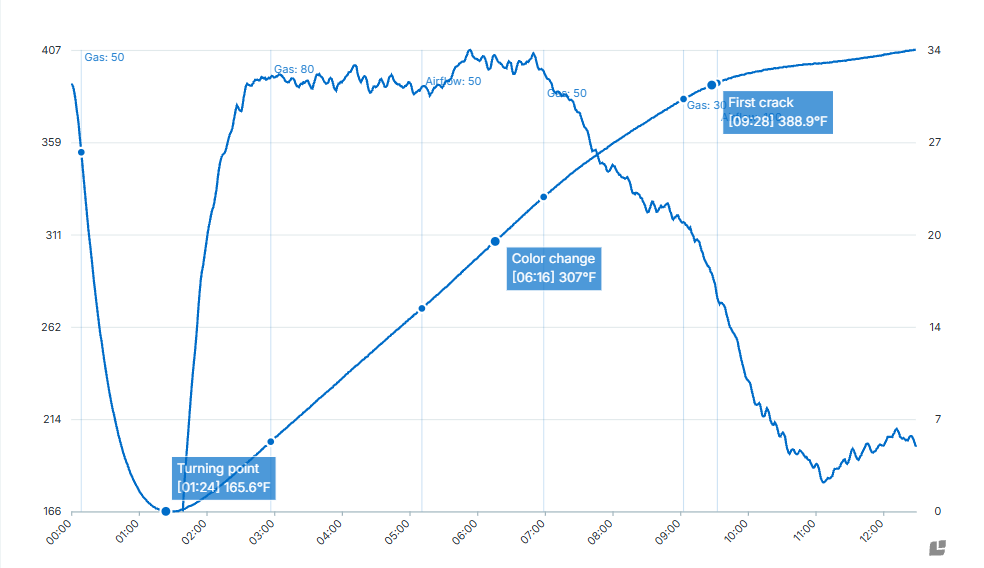
Color Change

6:16

First Crack

9:28

Roast Duration

12:29

Development Time

3:01

It was a pleasure to have the opportunity to work with this wet-hulled Red Cherry Sumatra. On the cupping table, this offering showed notes of cane sugar, peach, and black cherry. After doing a sample roast, I was looking forward to roasting a production batch on the Diedrich IR-5. I charged off the bean probe to 389°F with the burner set to 50%. Turning point was reached 1:24 into duration at 165°F. At 2:57, I increased the burner to 80%. As momentum began to build, I opened airflow to 50% at 5:11. I marked color change 6:16 into duration at 307°F. At 6:59, I reduced the burners to 50%. Moving closer to the development phase, I lowered the burner to 30%. I marked first crack 9:28 into duration at 388°F. Directly after reaching first crack, I increased airflow to 100%. The roast had momentum, and I wanted to achieve a lower end temperature and shorter development time than I would normally with a wet-hulled Sumatra because of how well this coffee was processed. I dropped the roast 12:29 in duration with 3:01 of development time and an end temperature of 407°F.

About The Source

RNY
RNY
RNY
RNY
RNY
RNY

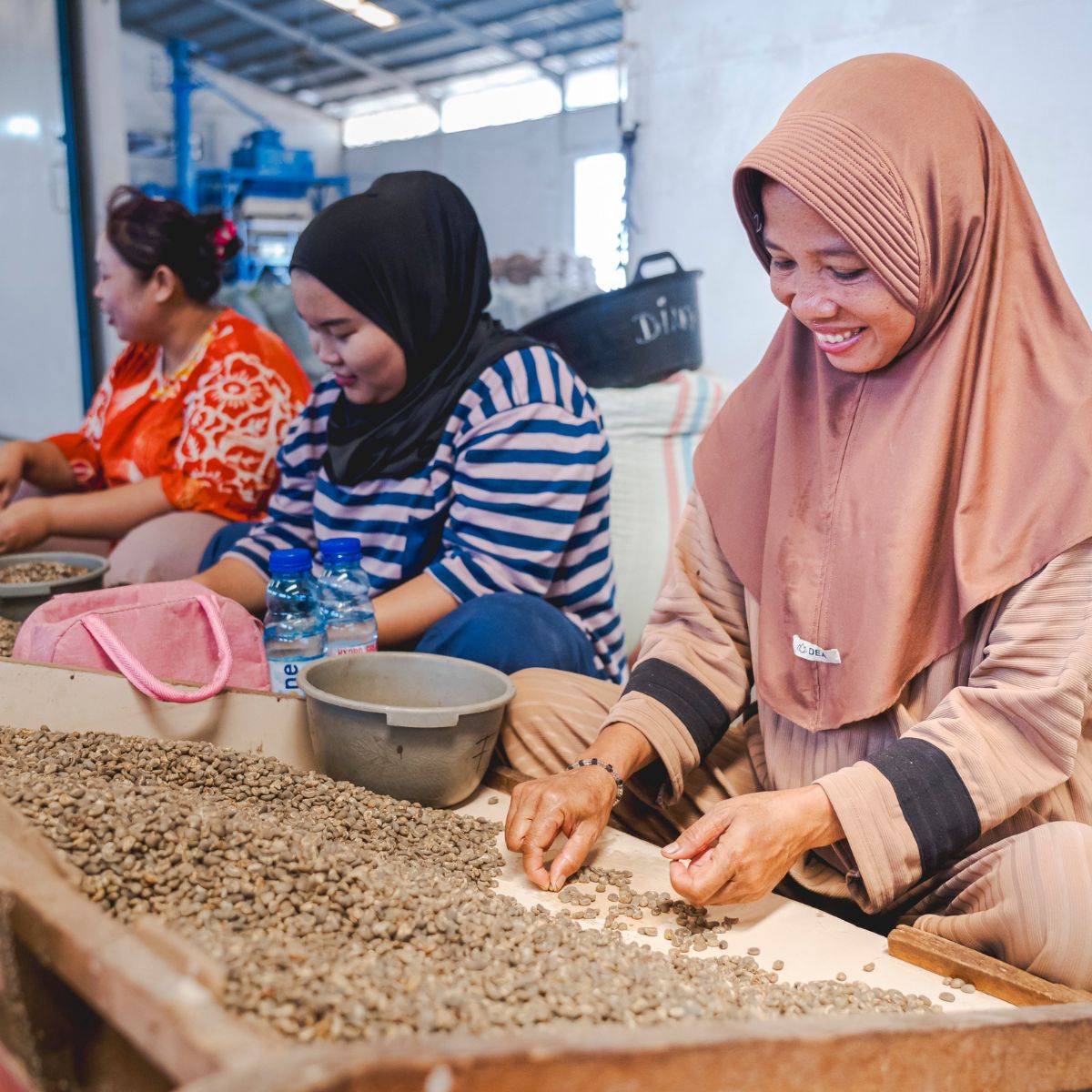
Produced by PT. Ihtiyeri Keti Ara (PT. IKA) in the Gayo Highlands of northern Sumatra, Red Cherry is a unique offering featuring the Ateng and Tim-tim varieties, grown at elevations of 1,400–1,700 meters. This coffee highlights the region's traditional wet-hulling process, known locally as Giling Basah, which remains an important part of the Gayo people's cultural heritage. Processing begins with the careful selection of fully ripe, red cherries, followed by pulping, fermentation, and soaking. After washing, the parchment is partially dried before being hulled at approximately 40% moisture and dried again to 13%. The coffee then undergoes gravity separation and optical color sorting to ensure consistent preparation and quality.

What makes Red Cherry particularly interesting is the emphasis on cherry selection and attention to detail throughout processing. These careful practices help create a distinctive expression of Gayo coffee while preserving the traditions that make this region's coffees so recognizable and appreciated worldwide.