Looks like you're located outside the continental United States!
While we can't ship Royal NY Line Up boxes to you through our website, our team of coffee traders will be happy to help place your order and secure the best shipping rates for you.
Please note that if you have other items in your cart such as tea or tickets to an event at The lab, you will not be able to proceed to payment until all 22lb. boxes have been removed from your order
Looks like you're located outside the continental United States!
While we can't ship Royal NY Line Up boxes to you through our website, your coffee trader will be happy to help place your order and secure the best shipping rates for you.
Darjeeling tea was first planted in India during the 1840’s when a British civil surgeon in the East India Company named Archibald Campbell planted seeds of the camellia sinensis plant in his garden. Thud, showing that the variety could flourish at higher elevations. Nurseries began popping up starting in 1847, and commercial production was underway by the 1850’s. Since then, Darjeeling has turned into one of the most in-demand teas in the world, and one of the most imitated. The Indian Tea Board passed specific legislation, in 1957 and 1999, controlling the branding of Darjeeling tea. This was in response to a growing number of tea producers labeling their teas as ‘Darjeeling’ while using material from nearby tea growing regions.
Where is it from?
We sourced this tea from the Phuguri Estate, which is located a few kilometers outside Mirik. Phuguri is RFA and HACCP certified and known for its Organic offerings. The Estate produces approximately 15,000 kilograms of tea yearly and stands on over 1,000 acres of land. The overall terroir of the Estate is extremely important to the final cup, and the combination of high altitude (approx. 1,600 meters) and excellent climate helps extend the time it takes for the leaves to mature. This extended maturation leads to a more complex cup and more pronounced aromatics.
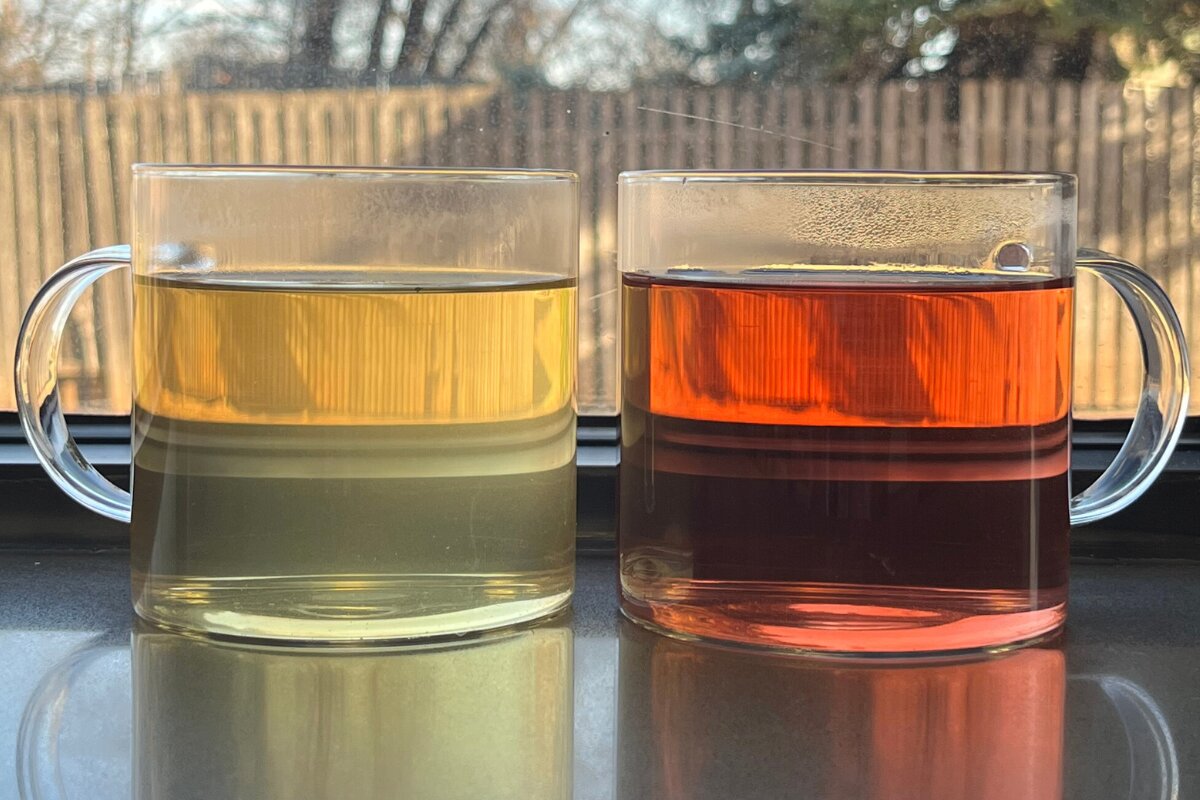
Teas are often classified by their harvest period, also known as “flush.” Darjeeling typically sorts into three flushes. First (mid-March), second (April-June), and third (Autumn-after rainy season). Second flush can be picked as early as April and usually runs through June. This harvest is noted for larger leaves with a lighter tip and faster growth. The cupping notes are distinct, giving the Darjeeling second flush a pronounced muscatel note rarely found elsewhere. It is further from the 1st flush through oxidation levels (1st flush having less oxidation). Darjeeling second flush offerings generally have a darker cup color than their first flush counterparts.
Almost all of the tea grown in India is of the camelia assamica family as opposed to the camelia sinensis plant grown in places like Japan and China. Darjeeling, however, is camelia sinensis. This particular offering is of the AV2 clonal, developed on the Ambari Estate. Cloning is a form of propagation that uses cuttings to develop new plants with favorable characteristics. Developing clonals is a very time- and labor-intensive process. However, it will be critically important in dealing with issues surrounding tea production and climate change in the future. It’s important to note, developing clonals does not imply this tea is genetically modified. Cloning in this sense is an act of selection, not modification.
We brewed this tea three different ways for analysis; once each by the standard and competition brew methods and once using the gongfu process of multiple steeps.
Our standard brew of this Darjeeling yielded a sweet cup, with strong notes of the characteristic muscatel grape and honey. The light, malty taste sets off the candy-like sweetness, rounding out the cup. The competition brew was more aromatic but kept the signature muscatel grape note. This brew also had a brisk, pine-like note that we found to be very pleasant.
Our gongfu brewing yielded the following results:
The tea used in this analysis is SKU1295 and is available for shipment from Royal Tea NY’s warehouse in South Plainfield, NJ.
Looks like you're not logged in! If you have an account, log in here
Don't have an account? Click here to register or close popup window and continue shopping.
You successfully reset your password, please login to your account.
This site uses cookies to allow for proper checkout and order processing; they are not used for any other tracking purposes. By continuing, you accept our use of cookies.