From the moment green coffee leaves the mill, it begins to change slowly, but continuously. Over time, shifts in moisture content, density, and chemistry can have a direct impact on how coffee behaves in a roaster. As a roaster, it’s important for a coffee on your menu to maintain consistency and quality throughout its life. For the second installment of Quality in Practice, learn how to understand and adapt your roast profile to accommodate green coffee aging.
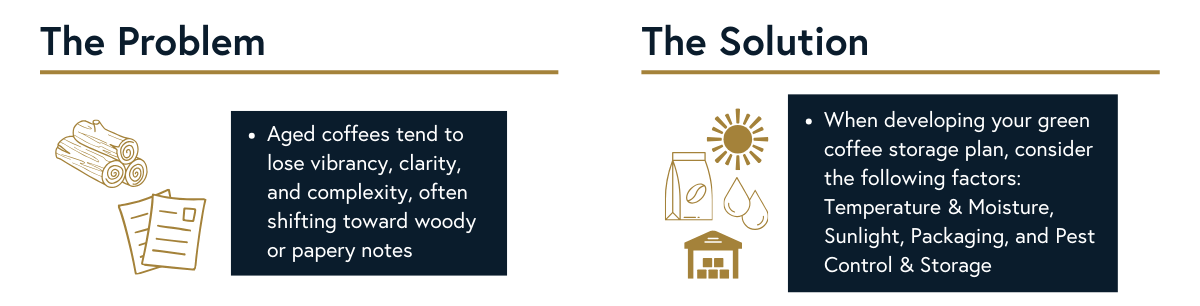
What happens when green coffee ages?
Moisture Loss
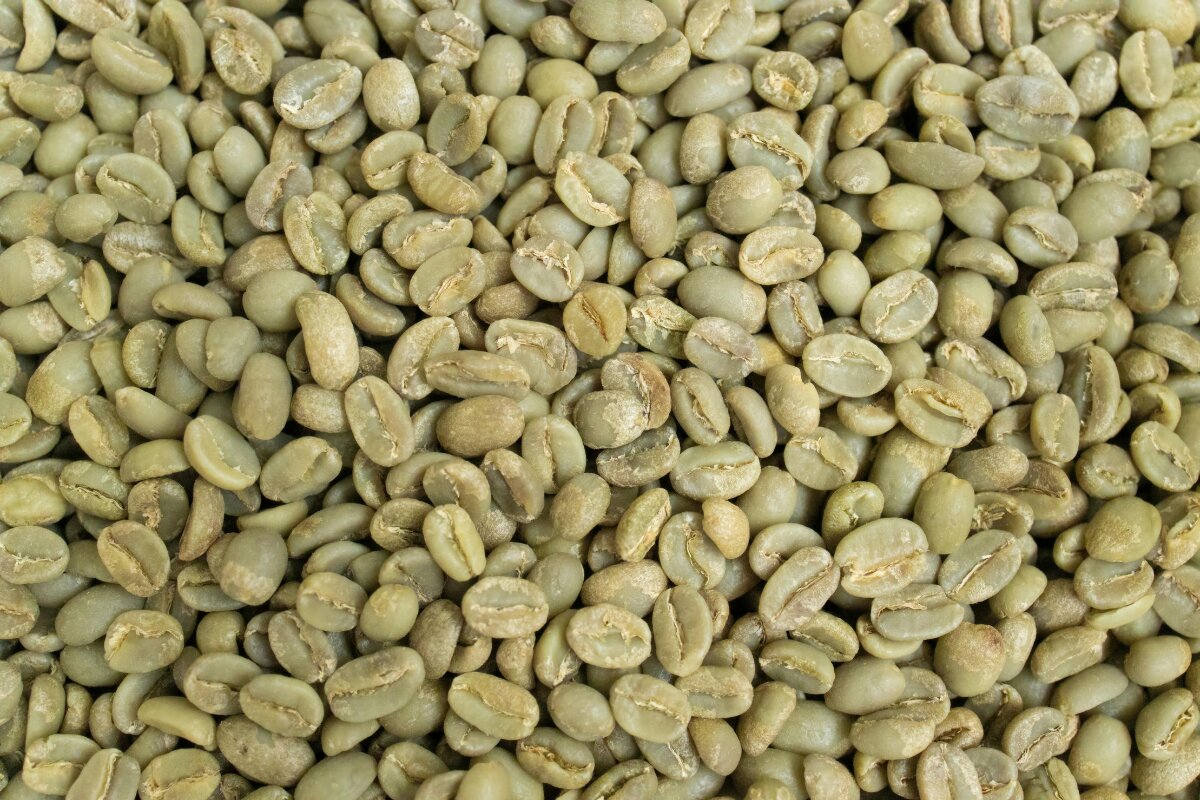
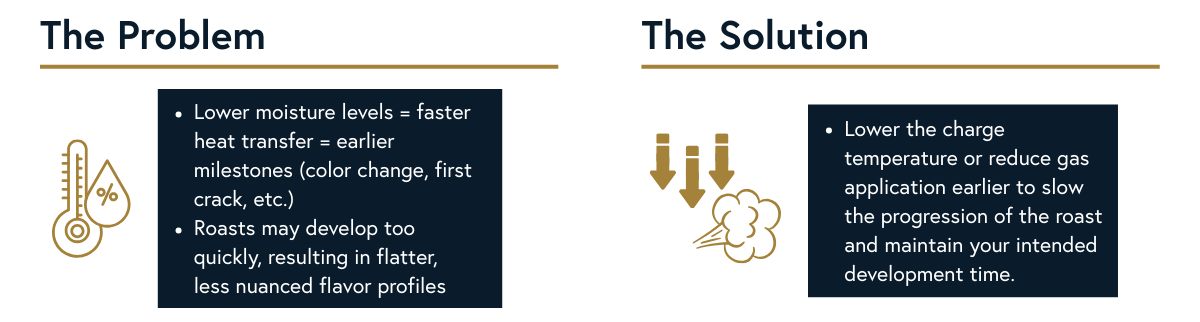
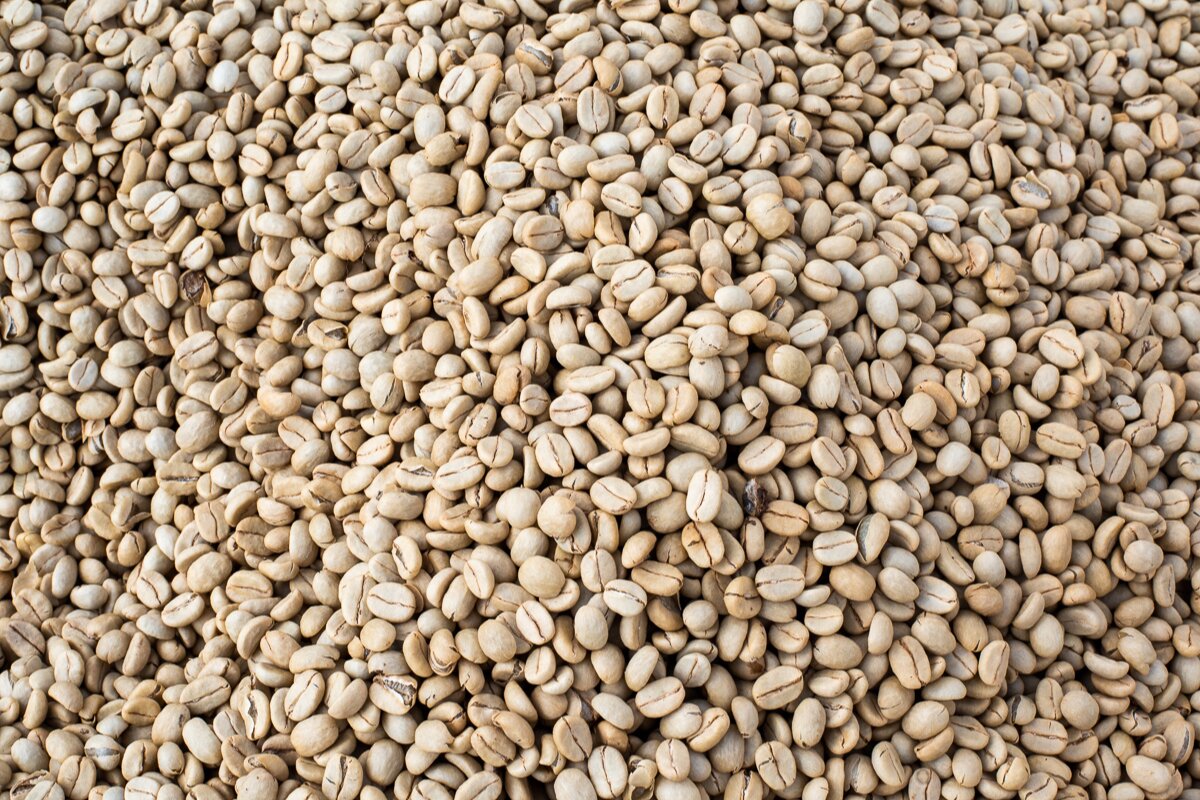
As green coffee ages, it gradually loses moisture. This can be accelerated by warm, dry storage environments or packaging that allows airflow.
Changes in Density
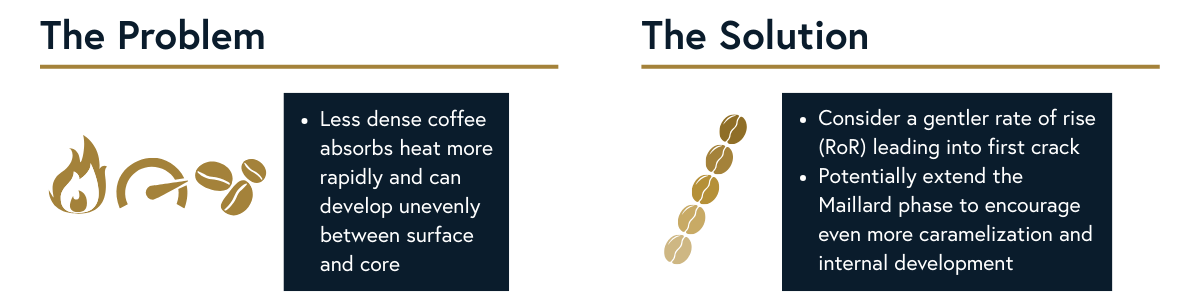
Over time, green coffee’s structure softens and becomes less dense.
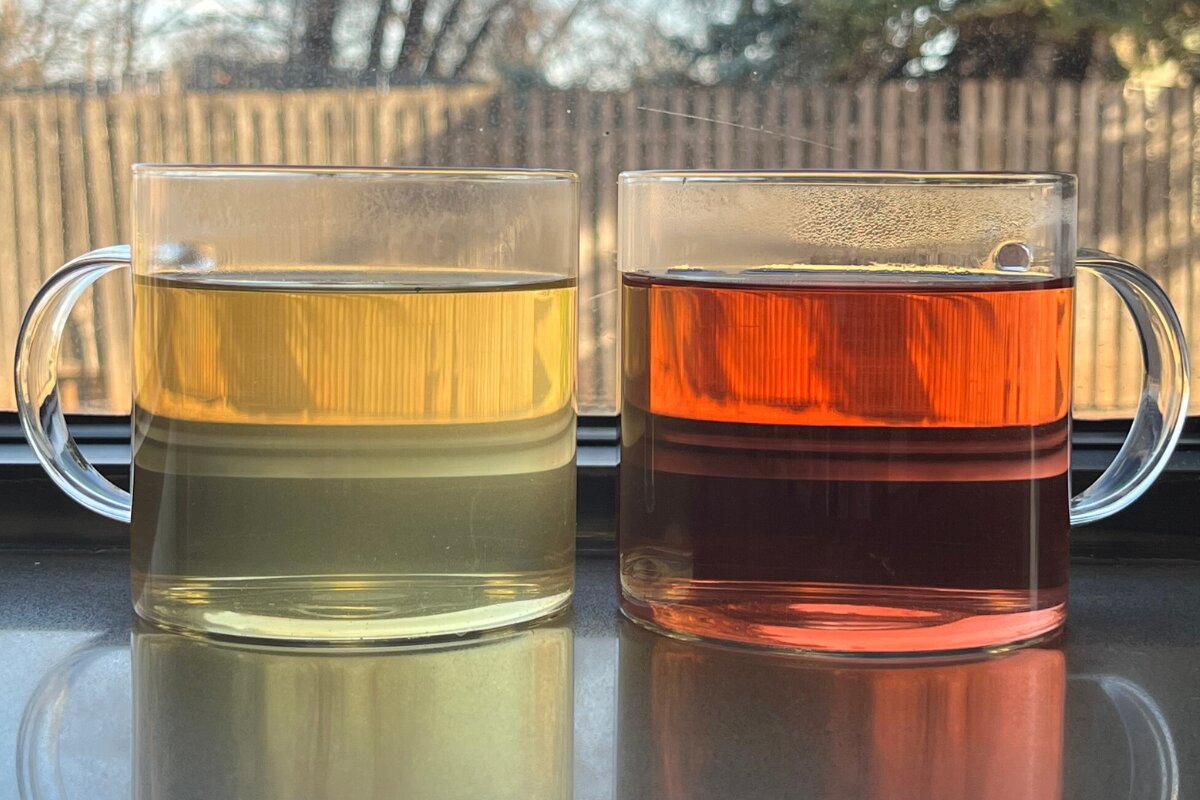
Chemical and Flavor Degradation
With green coffee aging in storage, chemical reactions slowly break down key flavor compounds, including acids, sugars, and aromatics.
How to Adapt Profiles for Green Coffee Aging
Track and Compare Roast Data
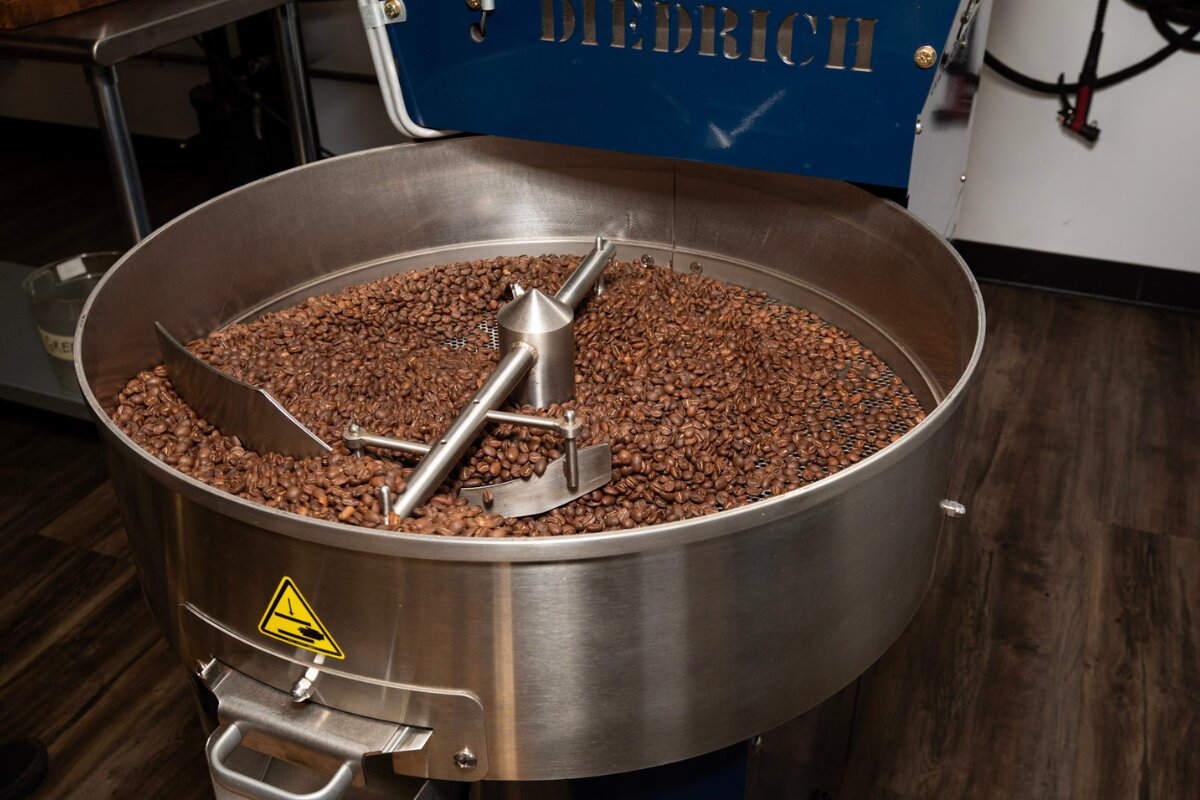
Use your roasting software to overlay new roast curves against your original reference profile. Watch for shifts in turning point, RoR, and first crack.
If the curve is trending faster or slower than before, it’s a sign the coffee is responding differently to heat and requires calibration.
Cup and Compare
Your sensory data is just as important as your roast data. Cup your roasts and ask questions that would prompt roast adjustments: Has sweetness decreased? Acidity flattened? Is the body thinning out or texture changing?
Make Small, Intentional Changes
Aging coffee rarely demands drastic alterations. Instead, focus on incremental tweaks. If the coffee is roasting too fast, lower the charge temperature or reduce early gas application. If it tastes thin or hollow, extend the Maillard phase or stretch total roast time.
Always test one variable at a time and evaluate the results before making additional changes.
Monitor Blend Performance
When a coffee appears in a blend, its changing profile may alter the blend’s overall balance. To provide your customers with a consistent offering, consider adjusting blend ratios or transitioning aging blend components with newer coffees.
Final Thoughts
Roast profiles aren’t fixed recipes—they’re living, adaptable frameworks. As green coffee changes, so must the way you apply heat. Maintaining a consistent experience over time requires a balance of data, sensory, and intuition. By revisiting and refining your profiles as coffees age, you are maintaining consistent cup quality.