Looks like you're located outside the continental United States!
While we can't ship Royal NY Line Up boxes to you through our website, our team of coffee traders will be happy to help place your order and secure the best shipping rates for you.
Please note that if you have other items in your cart such as tea or tickets to an event at The lab, you will not be able to proceed to payment until all 22lb. boxes have been removed from your order
Looks like you're located outside the continental United States!
While we can't ship Royal NY Line Up boxes to you through our website, your coffee trader will be happy to help place your order and secure the best shipping rates for you.
Though Honduras is the largest producer of specialty coffee in Central America, some of the best finds don’t come from larger farms, but small, individual producers. This particular offering from Hubert Nicolas’ Pacamara coffee micro lot perfectly exemplifies this idea. Two of our traders, Andrew Blyth and Brittany Amell, went to Honduras recently and cupped this Pacamara coffee, along with several others. They came back with many good things to say about this particular lot we. So, we decided to take a closer look at it before it arrives in June.
Honduras wasn’t always the coffee powerhouse it is now. Before the early 2000s, the country was a considerable exporter of commercial-grade coffee. Honduras lagged its neighbors through the 1990s as they developed strong specialty coffee markets. Countries like Nicaragua and Guatemala produced higher-scoring coffees. They were also hosts to the Cup of Excellence program in 2001 and 2003 respectively. A government tax in the early 2000s helped generate much-needed capital for infrastructure in coffee-producing regions. This helped transport coffee grown in fertile soils at higher altitudes to market. Today, more than 100,000 families are involved in coffee production, the majority producing their coffee on farms smaller than two hectares.
Hubert Nicolas
Hubert Nicolas is a Q Grader and fourth-generation coffee producer from the village of El Aguacatal in San Jose, Honduras. His farm, Finca El Tatascan, is situated at an average altitude of 1,550 meters above sea level and is located in the middle of a local forest reserve. Hubert takes special care in drying his coffee. He uses a solar-drying setup for 15 days to get the most out of his crop. From there, he transfers it directly into GrainPro bags and stores it in a warehouse for further processing for exportation.
Much has been said (and written) about the Pacamara coffee varietal. It’s a huge bean; screen size for this coffee was very much at the higher end of the spectrum. When done right, Pacamara has excellent flavor potential. However, if care is not taken in drying and processing, there can be a pronounced and unpleasant earthy flavor to the resulting brew. This varietal originated from the Salvadoran Institute of Coffee Research (ISIC) in late 1980s and is the result of a cross between Pacas and Maragogipe. The intent of this crossing was to capitalize on the drought- and disease-resistant nature of Pacas and the high cup quality of Maragogipe.
The Pacamara coffee arrived with a moisture content of 11.2%, which is a little higher than average. Density here was also quite high at 0.73 g/mL. These two factors, coupled with a larger-than-normal bean size will make roasting slightly more complex than a run-of-the-mill washed Central American coffee. One thing that you can look forward to is the overall preparation and grading of the bean. This is a remarkably well-sorted, uniform coffee. Though, keep in mind that this is an extremely large bean; this will play a part in the roasting process.
As mentioned in the green analysis section, there are a few variables that play into the roast profile construction here. First, the moisture content and density are both fairly high. This indicates the need for an extended drying phase at a reasonably high temperature. If you’re doing this on a traditional drum roaster, a low flame and high start temperature is the way to go. The IKAWA roaster we used for this test helps with temperature stability a bit, so we started the roast off a little hotter than normal in both profiles. From there, we need to account for the bean size. This lot will need a little extra heat to get into first crack, so backing off as you near that point isn’t going to work.
Click the roast curve above to download this IKAWA roast profile.
This first profile is to follow the instructions above. The drying phase was fairly relaxed, followed by a gradually increased browning phase into first crack. Overall development time here was shorter than average.
Click the roast curve above to download this IKAWA roast profile.
We tried for a longer development time for the second roast, with a slightly more aggressive drying process. Though the overall roast was slightly shorter, this coffee had more time post-crack to develop the fruity, sweet notes we expected.
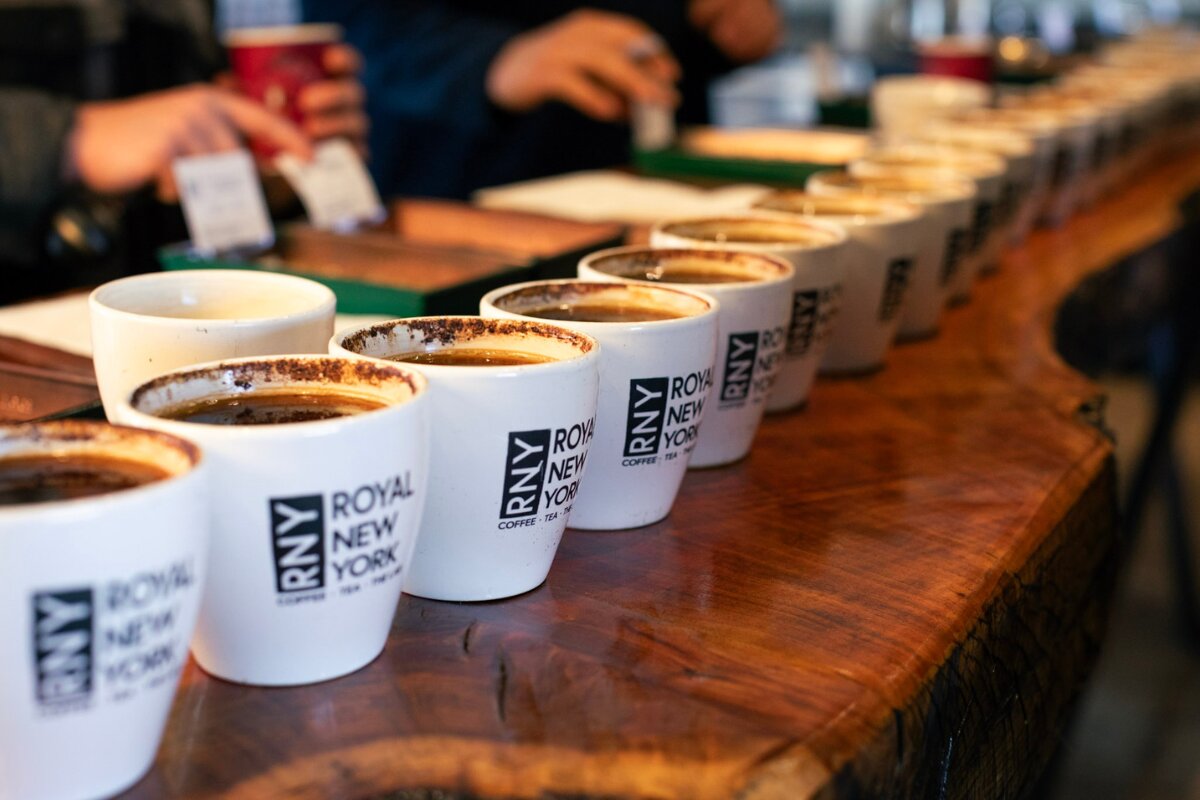
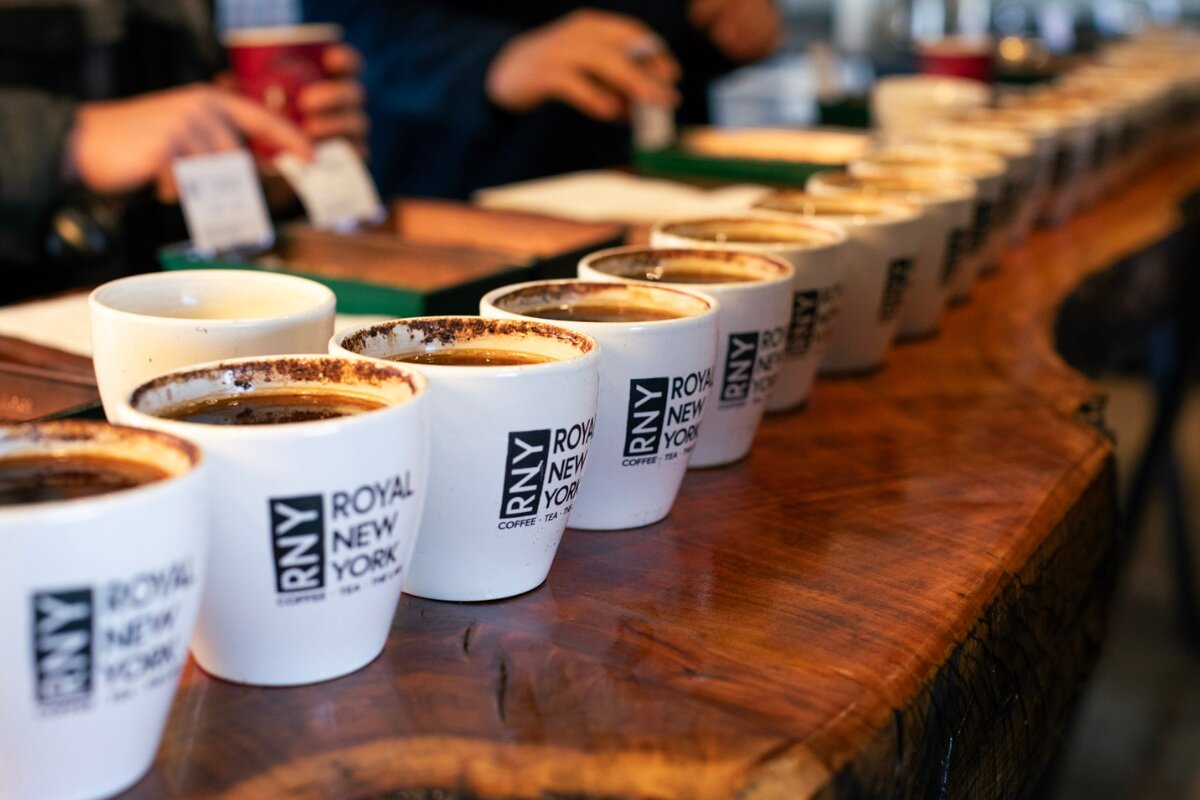
Given this coffee’s high score at origin, we were excited to put the two roasts on the cupping table. Side-by-side, we noticed a few differences:
Unfortunately, the first shot at roasting this coffee didn’t work as expected. The shorter development time left some of the fruit notes behind, instead giving us a more herbal, citrus-forward cup than we were expecting. Definitely keep this in mind as you roast this coffee; it needs some time to work after first crack.
The longer development time of the second IKAWA profile paid off. We were happy to find sweet notes of brown sugar and red apple rounded out by a tart, pineapple acidity. The cup was as fruit-forward and complex, with a sweet plum note rounding out the cup.
This is a limited-availability micro lot currently on its way to Royal from origin.
The coffee used in this analysis is reference number 38066 out of our warehouse in New Jersey. We strongly suggest reaching out to your trader as soon as possible if interested in adding this coffee to your offerings.
Looks like you're not logged in! If you have an account, log in here
Don't have an account? Click here to register or close popup window and continue shopping.
You successfully reset your password, please login to your account.
This site uses cookies to allow for proper checkout and order processing; they are not used for any other tracking purposes. By continuing, you accept our use of cookies.