Looks like you're located outside the continental United States!
While we can't ship Royal NY Line Up boxes to you through our website, our team of coffee traders will be happy to help place your order and secure the best shipping rates for you.
Please note that if you have other items in your cart such as tea or tickets to an event at The lab, you will not be able to proceed to payment until all 22lb. boxes have been removed from your order
Looks like you're located outside the continental United States!
While we can't ship Royal NY Line Up boxes to you through our website, your coffee trader will be happy to help place your order and secure the best shipping rates for you.
If you’re new to buying green coffee beans, it can be a daunting and often overwhelming task. With different origins, grades, varietals, and processing styles to choose from, knowing what to buy and when requires a fairly niche skill set. Add in near-constant price fluctuations, and the process can feel even more complicated.
To help you get your bearings, we wanted to put together a sort of quick-start guide for becoming an effective green coffee buyer. While there isn’t any one specific way to manage your business, understanding some fundamentals around purchasing will go a long way toward your success.
When buying green coffee, start small.
A big mistake a lot of new roasters make is overbuying right out of the gate. While coffee is a dried product and does have a relatively long shelf life, like all agricultural products, it does eventually stale. When it does, you’ll be left with a dry, malty-tasting end product.
Instead, a general recommendation is starting off with two or three caffeinated offerings and maybe a decaf. You can then increase variety from there. The goal is to move through the bag of coffee as quickly as possible to retain freshness. If you’re able to use any of your coffees for double duty, even better.
A great way to do that would be to buy and offer two single origins, then blend them to create a third offering. The following lots are delicious on their own, but also complement each other nicely in a blend:
While new coffee scoring systems have emerged over the years, by and large, most coffees are still scored using the 2004 SCA scorecard. The scorecard rewards high acidity and cup clarity with high scores.
To folks in the industry, this makes perfect sense. A high score is going to equate to a good cup of coffee, so it’s a great indicator of quality. But while buying high-quality coffee is a great way to attract discerning buyers, it also may ostracize the average coffee drinker. That customer is going to represent a much larger percentage of your clientele at the end of the day.
The people choosing a specialty coffee brand over a Starbucks or Dunkin are typically doing so to either support local business or because they recognize that your product is superior to what they’re getting from the chains.
A great way to satisfy that particular sector of customers is to develop a house blend with relatively broad appeal. Something like a medium-roasted Central or South American coffee will land well with a large contingency of your customers.
Humans are creatures of habit, so if you can consistently provide a familiar but better-than-average product, you’ll have success in securing your regulars.
A couple of great examples of these types of coffees would be:
It’s a good idea to familiarize yourself with offer lists from other roasters in your area. This can help you gain an understanding of what sells well, how lots are priced, and holes in the local market that you can step in to fill.
Cup coffee all the time.
Part of being great at buying green coffee beans is being able to identify what you like. You can then communicate those preferences to your coffee trader.
To do that effectively, though, you’ll want to develop language to describe what you like. We call this expanding your “sensory lexicon,” which is more or less just a mental pool of cupping notes you can use to describe a coffee.
If you look at the SCA flavor wheel, you’ll see things like “green apple,” “orange,” “strawberry,” and more. These are all ways to describe aspects of a coffee.
Obviously, if you take a sip of a cup of coffee, it’s not going to taste like strawberry juice; it’s going to taste like coffee. Being that coffee is a fruit, though, it’s going to contain many of the same compounds that make up a strawberry or an orange. Identifying these nuances can be challenging.
A great example of this would be in a “washed mild” type coffee. This is a term used to describe arabica beans with bright acidity and a balanced flavor profile.
Develop your sensory lexicon.
Two of the most common notes you’ll see on a washed mild are “red cherry” and “orange.” Both are typically used to describe acidity, but more specifically, they’re used to describe two different types of acids: malic and citric, respectively.
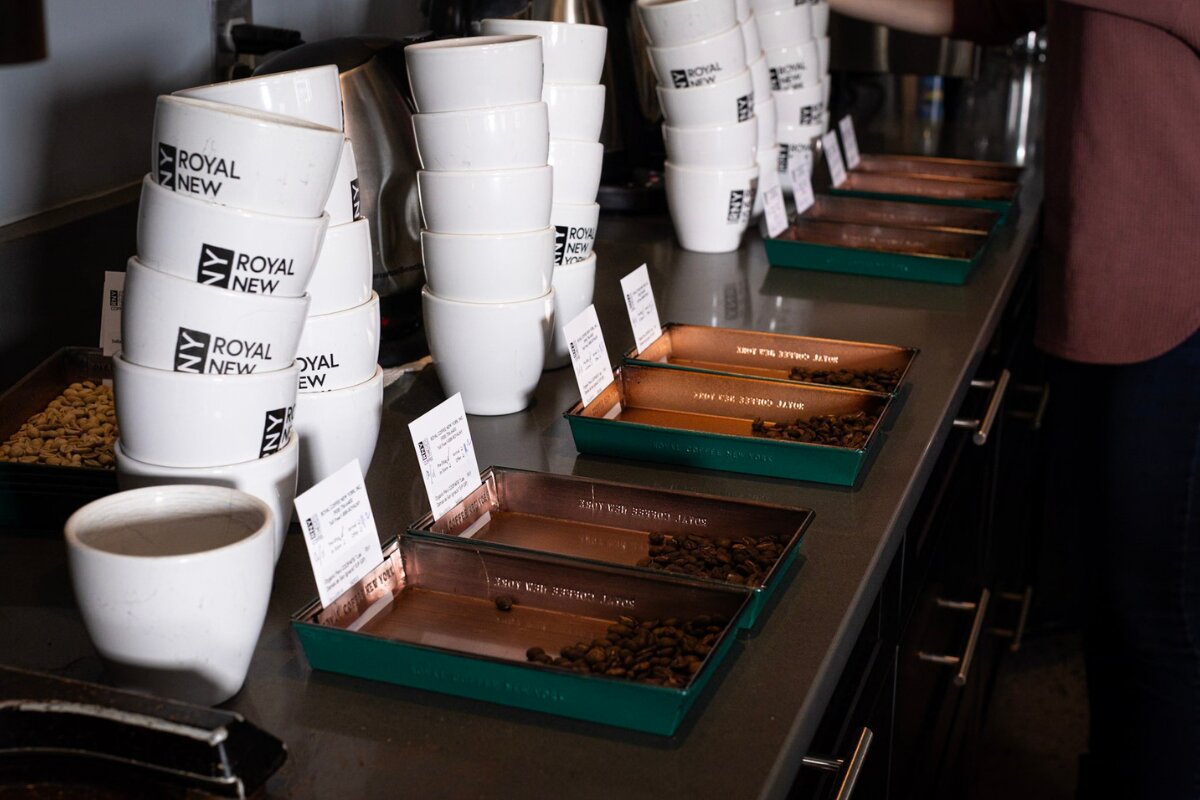
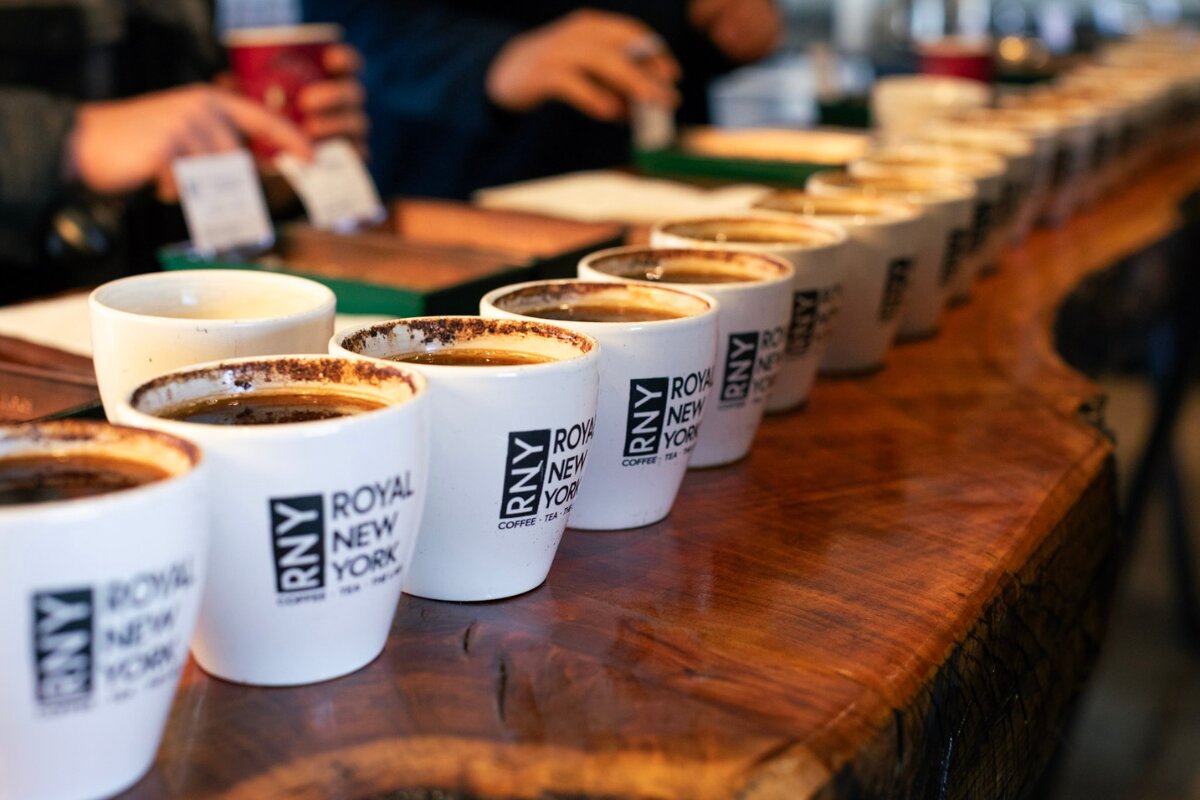
The best way to start identifying these notes is by cupping coffee all the time. Cupping involves a very strong immersion brew method and a technique that allows you to coat your entire palate with coffee at once.
It’s going to show the good, the bad, and the ugly in a cup of coffee. It’s also going to give you a good idea of how sharp, tart, sweet, savory, earthy, etc. the coffee you’re cupping is.
Over time, you’ll begin to relate these notes to fruits or identify how developed the sugars in a coffee are on a scale from cane sugar to molasses.
Having this foundation is going to allow you to tell your coffee trader you want a Colombia Supremo with notes of red cherries. You’ll have the confidence that they are going to provide you with a coffee that tastes exactly the way you’re expecting it to.
Get a cursory understanding of the “C” market.
This advice comes with a disclaimer: the “C” market is extraordinarily complex and can take years to fully wrap your head around. That said, it’s also the basis by which coffee beans are priced, so it’s a really important component of green buying to at least familiarize yourself with.
In short, the “C” market is ultimately the base value of coffee on a given day. This is the same principle that gas stations use to price out gasoline day-to-day. When oil supply falls out of balance with demand, we see crude oil costs increase. That, in turn, increases the cost of gasoline.
Since coffee is an agricultural product, things like dry weather in the growing season, wet weather in the drying season, coffee tree diseases, and labor shortages at origin can impact the “C” market. These factors then impact your coffee’s bottom line.
By extension, speculative news like a bad El Niño or a cold front can also lead to market rallies. This can happen just by virtue of investors becoming excitable.
You don’t necessarily need to monitor the forecast in Brazil to be an informed buyer. However, checking the market level a few times a week will help you recognize a good time to buy versus a bad time.
Gaining an instinct for catching a good market level is ultimately going to keep your costs down. That way, you can price your coffee competitively without having to sacrifice margins.
Buying green coffee takes time.
Green coffee buying is a tough job, especially if you’re an owner/operator and already have your hands full with roasting beans and managing sales. Following some of this advice will at least soften the learning curve for you.
And if all else fails, our team of traders is here five days a week to help steer you in the right direction!
Looks like you're not logged in! If you have an account, log in here
Don't have an account? Click here to register or close popup window and continue shopping.
You successfully reset your password, please login to your account.
This site uses cookies to allow for proper checkout and order processing; they are not used for any other tracking purposes. By continuing, you accept our use of cookies.